DO YOU FEEL COMFORTABLE IN YOUR OWN SKIN?
Services
Spatial Art & Installation
Graphic Design & Typography
Material
SILICON, TEXTILE MATERIAL, CLAY, DRY PASTEL, GLUE, RECYCLED MATERIAL
Location
Košice, FUTU
Year
2025
Info
The work reflects the relationship to one’s own appearance and societal expectations. It deals with questions of self-confidence and aesthetic norms. The skin is the largest human organ, yet we often fail to realize that it mirrors our physical and psychological health. Skin issues are therefore a common problem that goes beyond individual experience and affects many people. Long-term fluctuations in my own skin have led me to more intense self-doubt and to searching for a balance in my self-confidence. I am aware that acne has traditionally been perceived as an aesthetic flaw. This label influences how a person evaluates their own body.
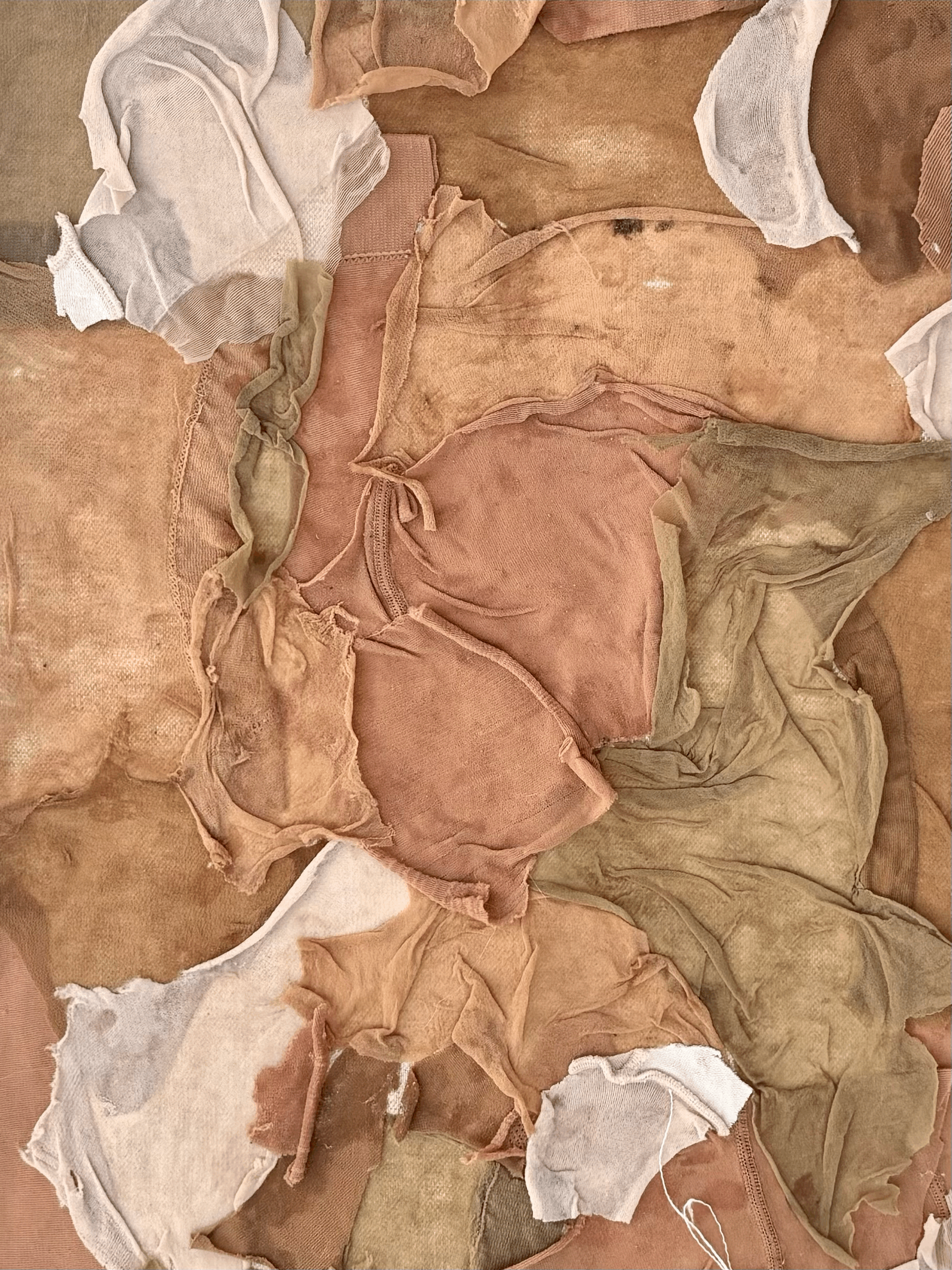
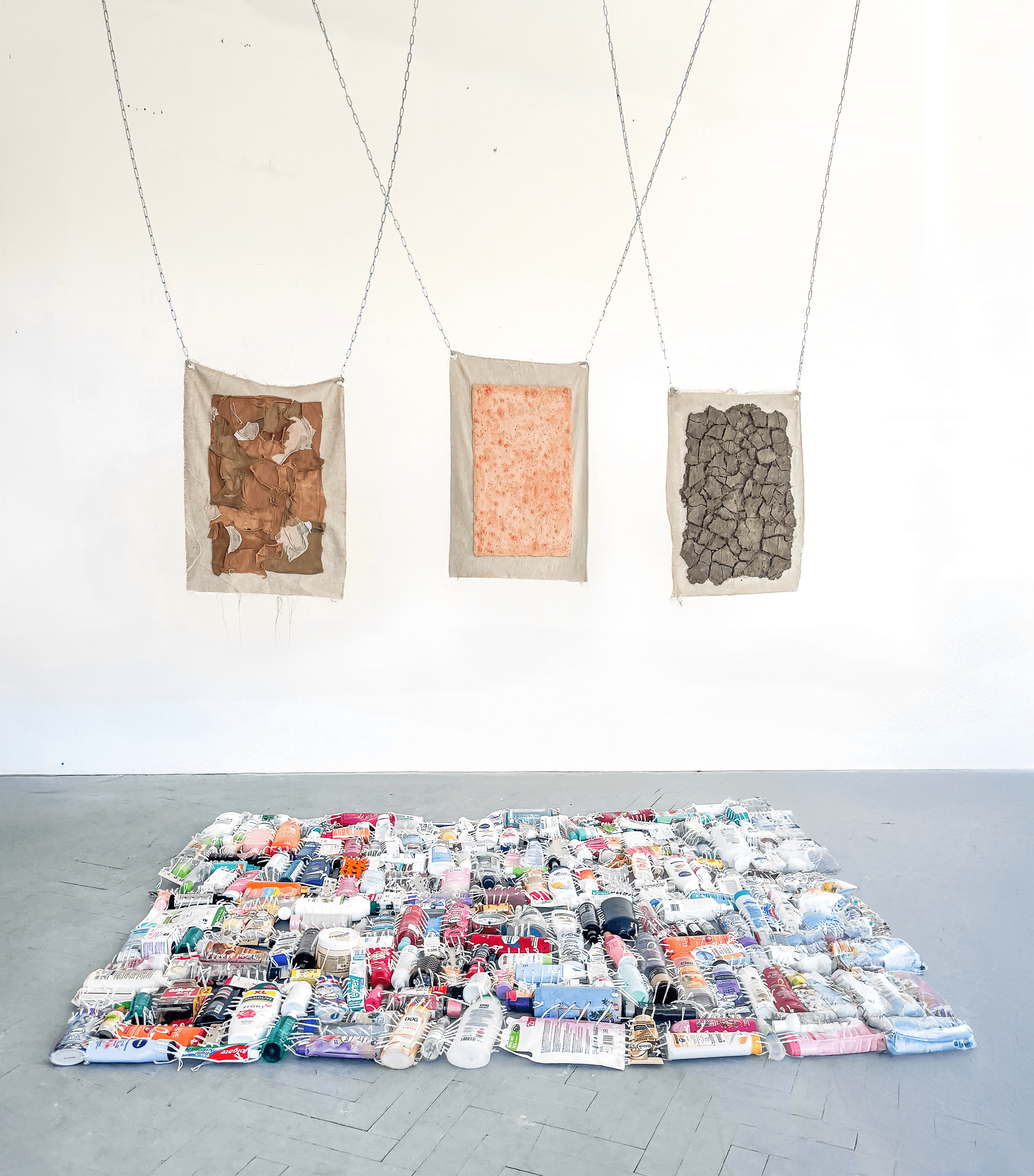
In creating the installation, I use the field of geology—specifically stratigraphy—as a metaphorical framework. Just as soil preserves layers of geological time, the skin reflects subtle physical and psychological transformations. The principle of layering materials and relief structures allows me to translate this process into space and to present the skin as an archive that is constantly changing and carries the imprints of everyday experiences.
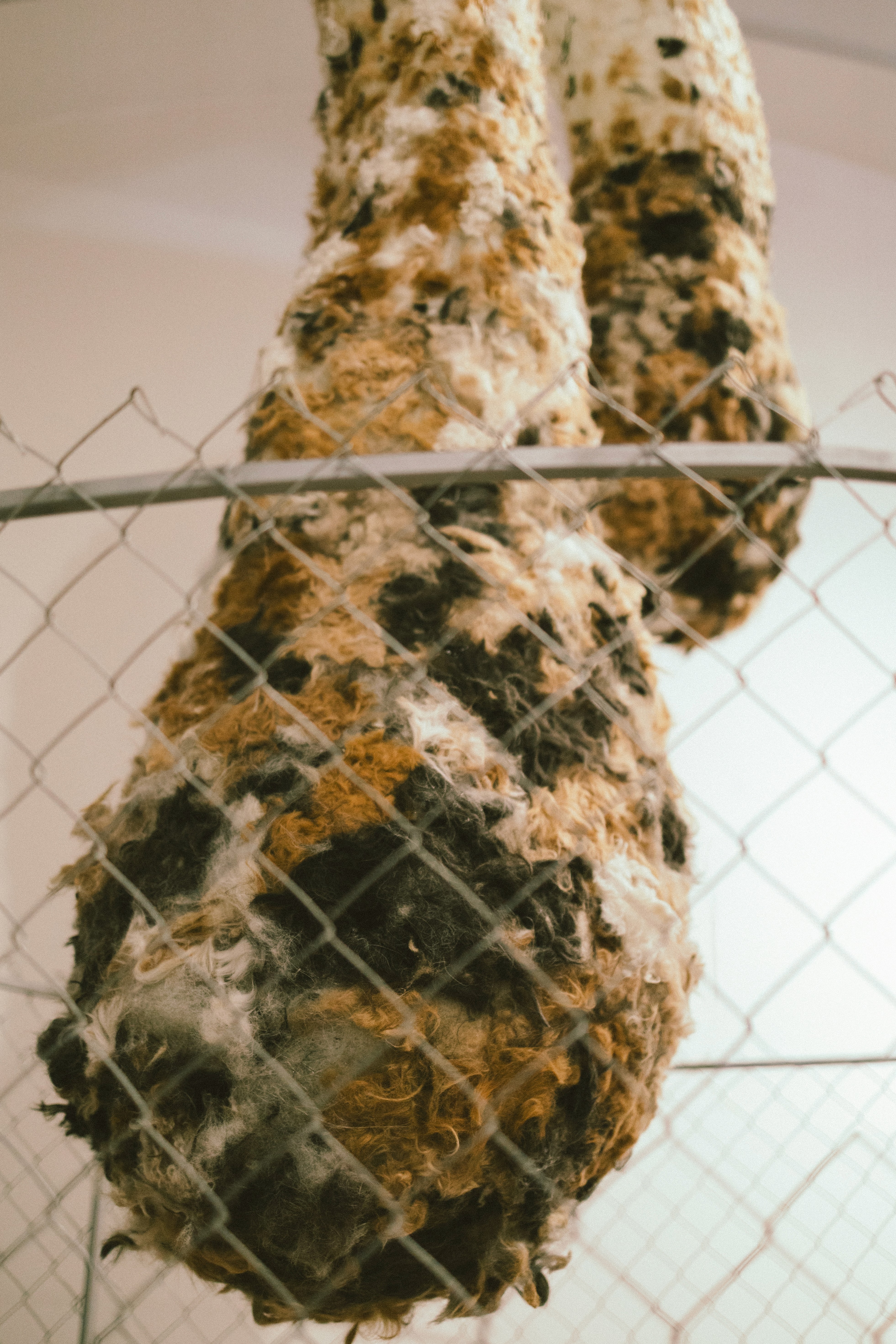
In the piece, I work with discarded materials that I collected from different people. Their variety symbolizes the broad range of individual skin stories. I perceive these objects as traces of personal rituals and care strategies that reveal different attempts to understand one’s own identity.
The alarm clock at the center of the installation represents time as an element of transformation and gradual healing. The presence of chains refers to the constraints that often arise in relation to one’s self-image and the expectations a person places upon themselves.
As a whole, the work functions as a visual and material diary through which I explore the relationship between physical appearance and inner experience. For me, the piece represents an opportunity to reflect on self-confidence and how it is shaped within the context of societal expectations and personal experience.
The graphic serving as an annotation for the artwork refers to the classic typography and visual aesthetic of a medical report, similar to those commonly received at a dermatologist’s office.