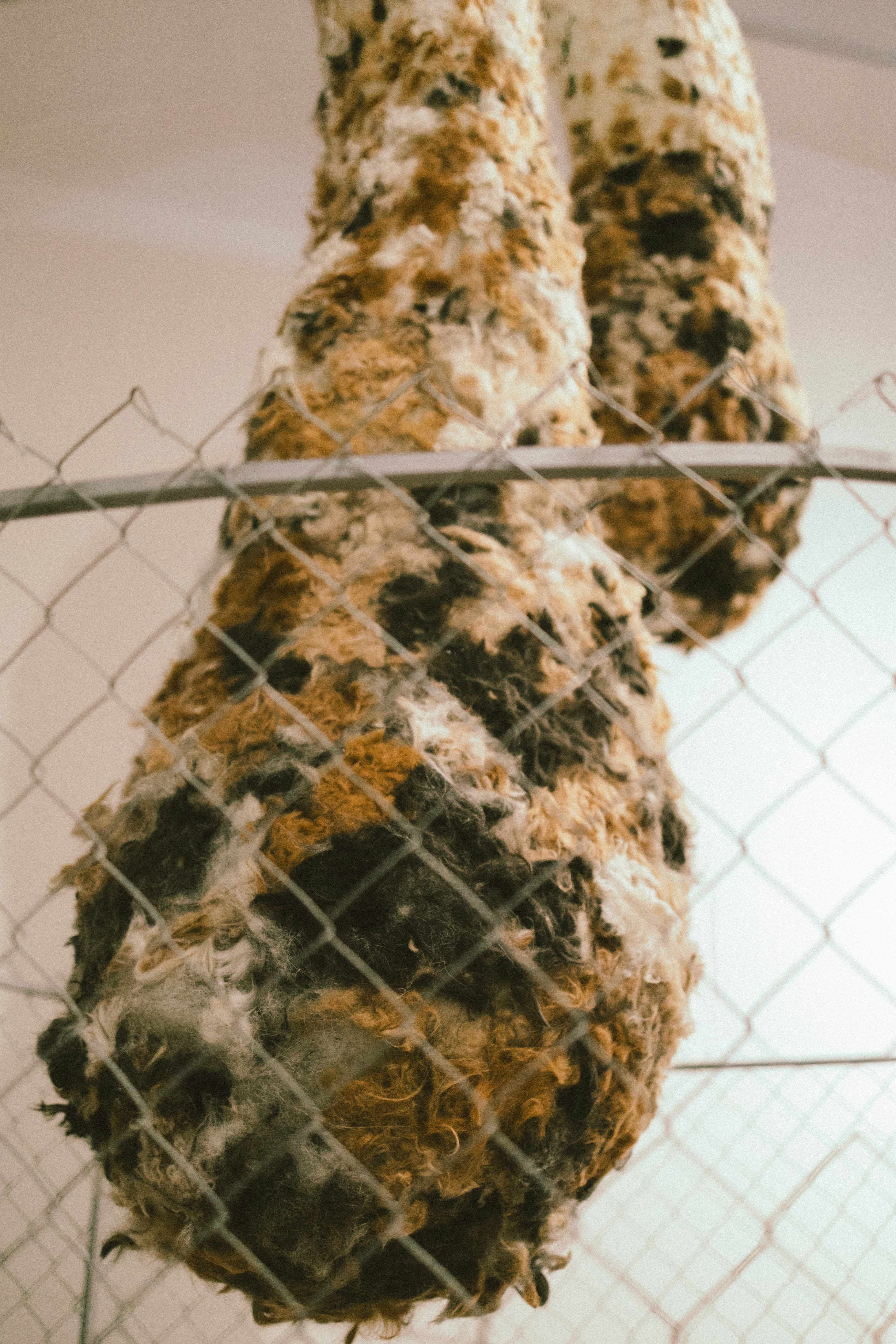
the color that defines the moment

Services
Graphic Design & Typography
Spatial Art & Installation
Material
Objects, wood, hand sawn book, photography, watercolor paintings, graphics design
Location
Galerija Alkatraz, Ljubljana, Slovenia
Year
2026
Credits
Process behind our project for ReciklArt, where we were challenged to create a work based on the theme Food Abundance and Scarcity.
Five days.
One theme.


head
neck
shoulder
foreleg
loin
ribs
belly
tenderloin
ham (hind leg)
hind hock
hind foot
tail


Info
This work was developed in collaboration with Natália Gulyásová as part of the Erasmus+ youth exchange and the Art Colony of the 12th Reciklart Festival, Ljubljana, 2026.

The Color That Defines the Moment looks at our relationship with food, eating, and the body. The idea started from something very simple: when we eat too much, we often say that we feel “like a pig.” From this expression, we began thinking about overeating, eating disorders, guilt, and the way we see animals as food. The pig in the installation is divided into pieces, similar to how a pig is divided in a butcher shop. The pieces can be moved and put back together like a puzzle. It is placed in a trough, surrounded by the idea of food and abundance. A hammer is also part of the installation, bringing attention to the violence behind the process of turning an animal into food.
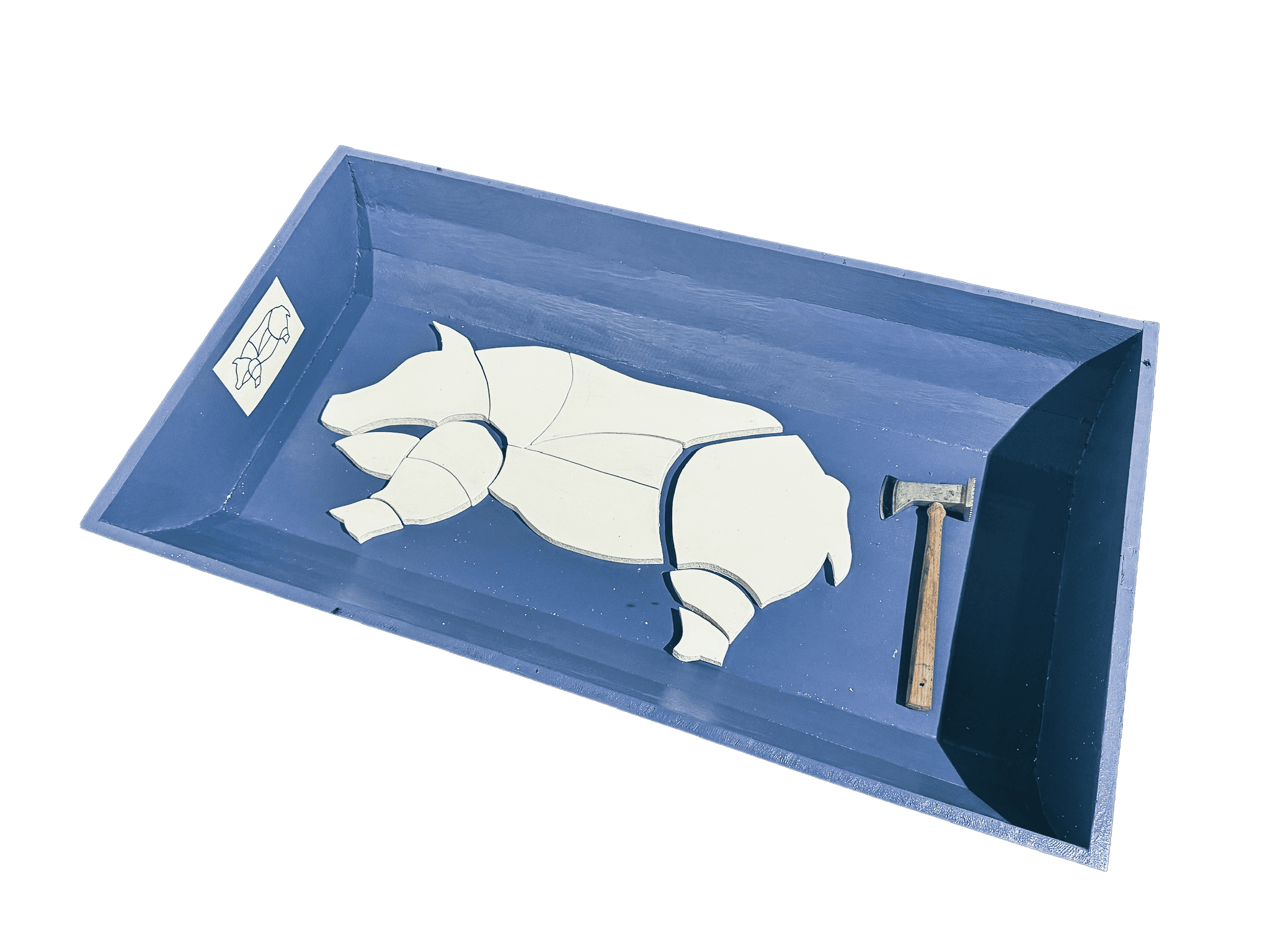
The work also asks a simple question: who is responsible for overeating? Is it the pig that eats too much, or the people who keep giving it food?
The installation is connected to an artist’s book made from photographs of pigs taken during our stay in Ljubljana. Each photograph is combined with a watercolour and a word describing a feeling or moment from the pig’s life. As the book continues, the colours slowly change from soft and pleasant to dark, dirty, and finally grey, like bones. The photographs are printed on transparent paper, so the colours from the next pages slowly appear through the images. The further you go into the book, the more uncomfortable the images become. Together, the book and the installation tell one story about food, excess, life, and the way we turn something living into something we consume.